The 21-Day Hiring Benchmark: What Fast, High-Quality Recruitment Actually Requires August 2026
- October 26, 2026
The 21-Day Hiring Benchmark: What Fast, High-Quality Recruitment Actually Requires August 2026
Speed Is Not the Enemy of Quality — Slowness Is
Most leadership teams treat “hire fast” and “hire well” as competing goals, as if the only way to move quickly is to cut corners on evaluation. The data says otherwise. The gap between an average hiring process and a genuinely fast one in India isn’t about doing less — it’s about doing the same work with far less wasted time between steps.
That gap is bigger than most CXOs realize, and closing even part of it is one of the highest-leverage moves available to any hiring leader in 2026.

Where India Actually Stands Today
The average time-to-hire in India in 2026 runs roughly 35 to 45 days from an approved requisition to an accepted offer, according to Naukri’s JobSpeak-based analysis. Those average hides enormous variation: retail and e-commerce roles fill in 14 to 20 days, while senior AI/ML or cybersecurity roles routinely take 50 to 70 days, and executive searches often exceed 120.
For technical and senior roles specifically, the picture is slower still — 42 to 60 days end-to-end is typical, while the best-in-class benchmark sits under 10 days (source). That’s not a small efficiency gap. It’s the difference between closing a role in under two weeks and losing it to a faster-moving competitor a month and a half in.
The stakes are sharpened by what happens after an offer is accepted. Average notice periods for senior tech hires in India now run around 60 to 90 days, and that window is where a large share of accepted offers quietly fall apart, as competing offers and counteroffers arrive before the candidate’s first day.
Why 21 Days Is the Right Target, Not an Arbitrary One
Twenty-one days sits deliberately between two real data points: the national average of 35–45 days, and the best-in-class benchmark of under 10. It’s fast enough to beat the vast majority of competing processes a candidate is likely running in parallel, and realistic enough to hit without eliminating genuine evaluation steps.
The market rewards this specifically. Top-performing candidates exit the job search entirely within about 10 days of starting to look, and roughly three-quarters of candidates judge a prospective employer by how fast and clear its process feels. A 21-day process isn’t just operationally efficient — it’s a genuine competitive advantage in a market where the best candidates are gone before slower processes even reach the interview stage.

What a 21-Day Process Actually Requires
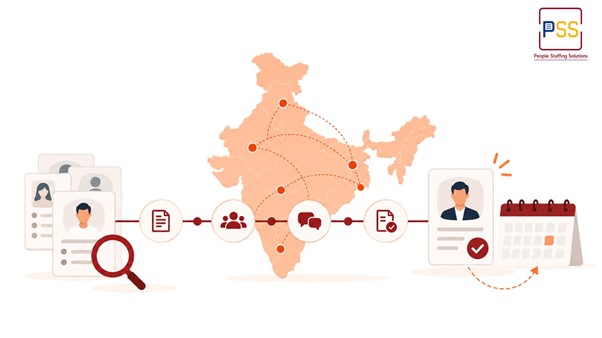
Getting to 21 days isn’t about skipping steps. It’s about removing the dead time between them:
- Three structured rounds, not five. A hiring manager screen, one functional or technical assessment, and a final leadership or culture round is the recommended ceiling for most mid-senior roles — beyond that, added rounds add delay without adding decision quality (source).
- Same-week scheduling, not same-month. The single biggest source of dead time is calendar gaps between rounds, not the rounds themselves.
- Offer approval that runs in parallel, not after. Waiting until a final interview concludes to start offer approval routinely adds a week or more that could run concurrently.
- A notice-period engagement plan built in from the offer stage. Since notice periods now regularly stretch to 60–90 days, a fast internal process only pays off if it’s paired with active engagement through that window — otherwise the speed gained upfront gets lost to a late-stage counteroffer anyway.

The Cost of Not Closing This Gap
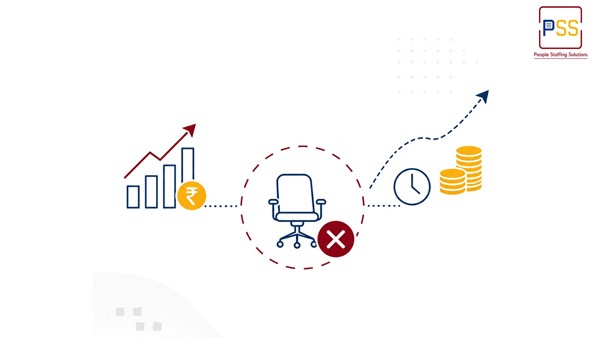
This isn’t a soft metric. An unfilled senior role in India costs roughly ₹1,600 to ₹2,400 per working day in lost productivity, based on standard productivity multipliers for senior positions (source). Across a typical 42-day hiring cycle, that adds up to ₹67,000 to over ₹1 lakh per role — and scales directly with every additional day the process runs long.
The Bottom Line
The organizations winning senior and specialized talent in India in 2026 aren’t necessarily paying more — they’re simply faster, in a market where speed itself has become a form of competitive advantage. Twenty-one days isn’t an aggressive target. It’s the realistic middle ground between where most companies operate today and where the fastest ones already are. Closing that gap doesn’t require a bigger budget. It requires removing the dead time your own process is quietly adding at every stage.
Sources
- The People’s Board, “Recruitment Statistics India 2026: Hiring, Cost, Speed” — https://www.thepeoplesboard.com/recruitment/recruitment-statistics-india-2026-whos-hiring-how-fast-and-what-it-costs/
- Hire22.ai, “How to Reduce Time-to-Hire in India by 90%” — https://www.hire22.ai/blog/how-to-reduce-time-to-hire-india/
- TekSands, “The India Tech Hiring Playbook 2026” — https://teksands.ai/blogs/india-tech-hiring-playbook-2026
- Navero, “Time to Hire Calculation + 2026 Benchmarks by Industry” — https://www.navero.me/blog/how-to-calculate-time-to-hire-formula
Let’s connect for a Strategic Discussion!