India’s Niche Tech Talent Difficulty Index 2026
- September 5, 2026
India’s Niche Tech Talent Difficulty Index 2026
Some tech roles fill in weeks. Others take twice as long — and cost twice as much. Here’s the 2026 Niche Talent Difficulty Index every CXO should check before planning a hire.
A Java developer and a CAT modeler are not the same hiring problem, even if they sit on the same org chart. Treating them the same is how a critical hire ends up six months late.
Introducing the Niche Talent Difficulty Score
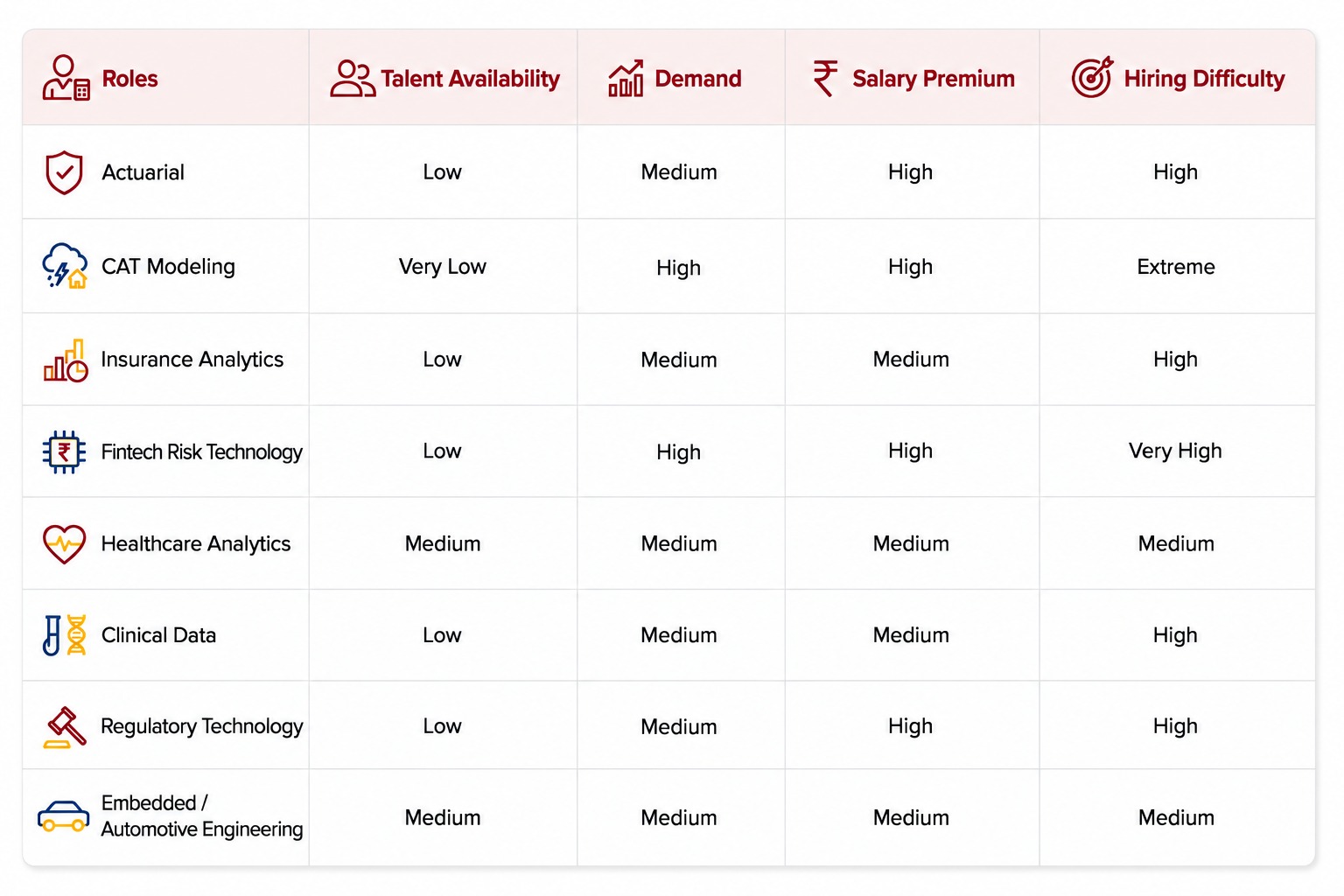
We scored 16 in-demand technology roles across 4 factors: Talent Availability, Hiring Demand, Salary Premium, and Hiring difficulty. Here’s “Extreme rating” to use before locking in a hiring timeline.
What “Extreme” Actually Means
An “Extreme” rating describes a specific, recurring pattern:
- The candidate pool is small and concentrated in one or two cities.
- Everyone qualified is already employed, well-paid, and not actively looking.
- Notice periods run long, and counter-offers get aggressive once a resignation lands.
- There’s no “post the job and wait” path — sourcing has to be direct and relationship-led.
CAT modeling and GenAI engineering sit here for different reasons — one because the discipline is genuinely rare in India, the other because demand has outrun the supply of experienced people. Either way, these roles can’t be hired on a standard 30–45 day cycle.
Why This Beats a “Top Skills” List
A skills list tells you what’s popular. A difficulty index tells you what will actually slow your hiring plan down — the number CXOs need for workforce planning, not recruiting trivia.
It also explains something most leadership teams have felt but not named: two roles can look equally senior on paper and take wildly different amounts of time to close. A Cloud Architect search and a CAT Modeler search aren’t the same project, even under the same “senior technical hire” line item.
How to Use This in Your Planning
- Medium and High difficulty roles can run on a standard timeline, with a little extra compensation flexibility built in.
- Very High difficulty roles need sourcing to start 60 days early, benchmarked against current market movement — not last year’s data.
- Extreme difficulty roles need a 90-day head start and direct, relationship-led sourcing — job postings alone won’t reach this pool.
Companies that consistently hit their hiring timelines aren’t the ones with bigger budgets. They’re the ones who stopped treating every open role as an equally solvable problem.
The Bottom Line
Not all technology hiring is the same problem wearing a different job title. Some roles are genuinely scarce and slow to fill, and no amount of urgency changes that math. Knowing which roles fall into that category before you need them is the difference between a hiring plan that holds and one that quietly slips by a quarter.
Let’s connect for a Strategic Discussion!