Your 3% Hiring Growth Number Is Hiding a Talent Crisis
- July 24, 2026
The Headline Number Is Lying to You: What’s Really Happening in India’s 2026 IT Hiring Market
If you’ve seen the topline figure — India’s IT hiring growing a modest 3% year-on-year — you might assume 2026 is a cautious, business-as-usual year for tech talent. That number is technically true and strategically misleading.
Beneath that modest headline, hiring has quietly split in two. AI, cloud, and cybersecurity roles now make up nearly two-thirds of all tech hiring demand. AI-first roles alone account for almost a third of new demand. At the same time, legacy roles — QA, IT support, routine testing — are shrinking as automation absorbs the work.
Companies aren’t hiring less. They’re hiring for a completely different skill set, at a completely different pace, than they were even 18 months ago.
The Three Shifts Separating Winners From the Ones Who’ll Find Out Later
- The Back Office Just Became the Front Line Global Capability Centres now account for nearly 44% of India’s IT hiring, up sharply from last year, and they’re increasingly hiring for senior, specialized, global-facing roles — not support functions. If GCCs aren’t central to your talent strategy, you’re competing for a shrinking share of the best talent.
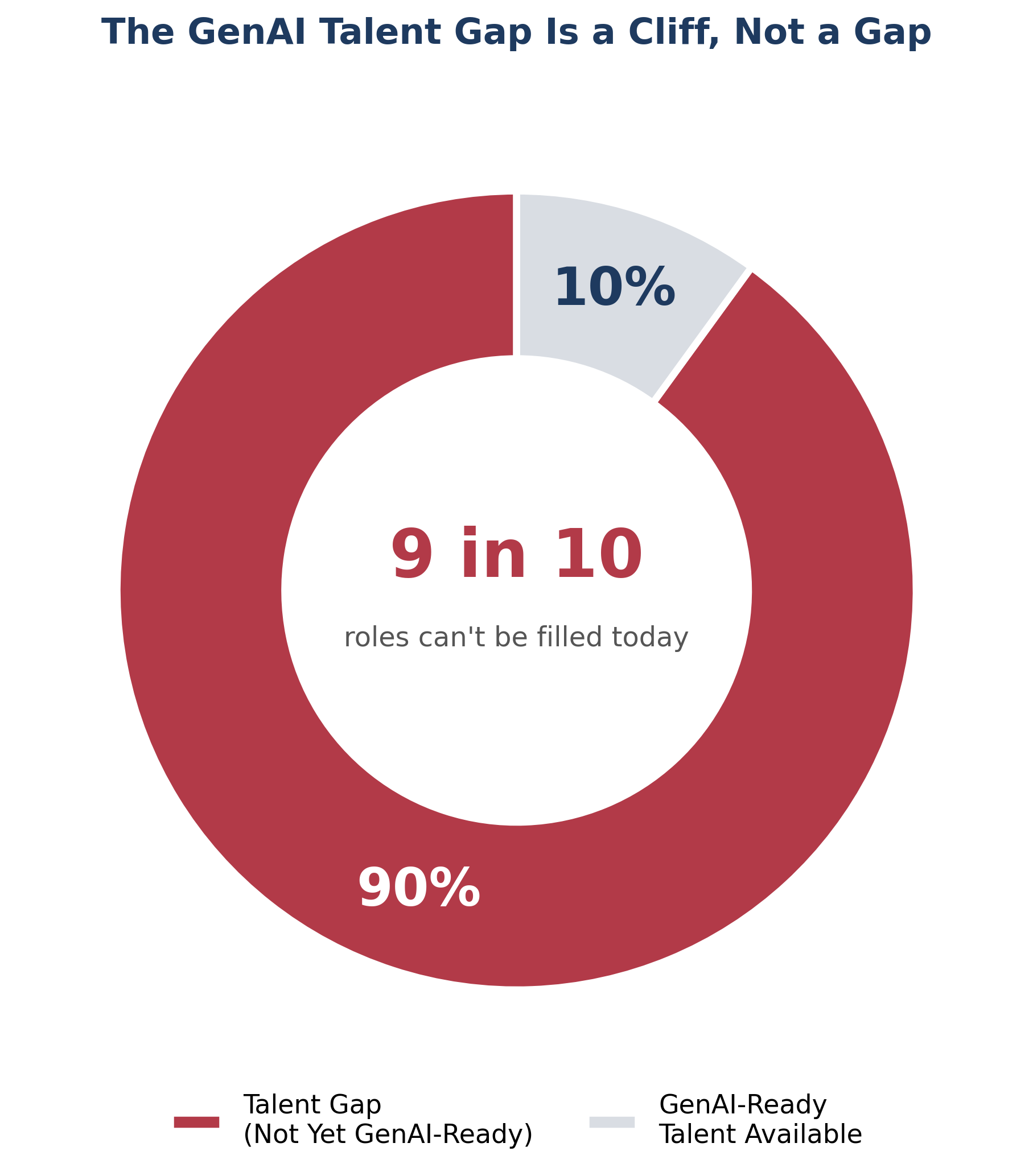
- The Skill Gap Isn’t a Gap Anymore. It’s a Cliff. Talent ready for generative AI work is in such short supply that roughly 9 in 10 qualified candidates simply don’t exist yet. Cloud and cybersecurity gaps aren’t far behind. This isn’t a recruiting inconvenience — it’s a constraint on how fast any strategy can actually execute.
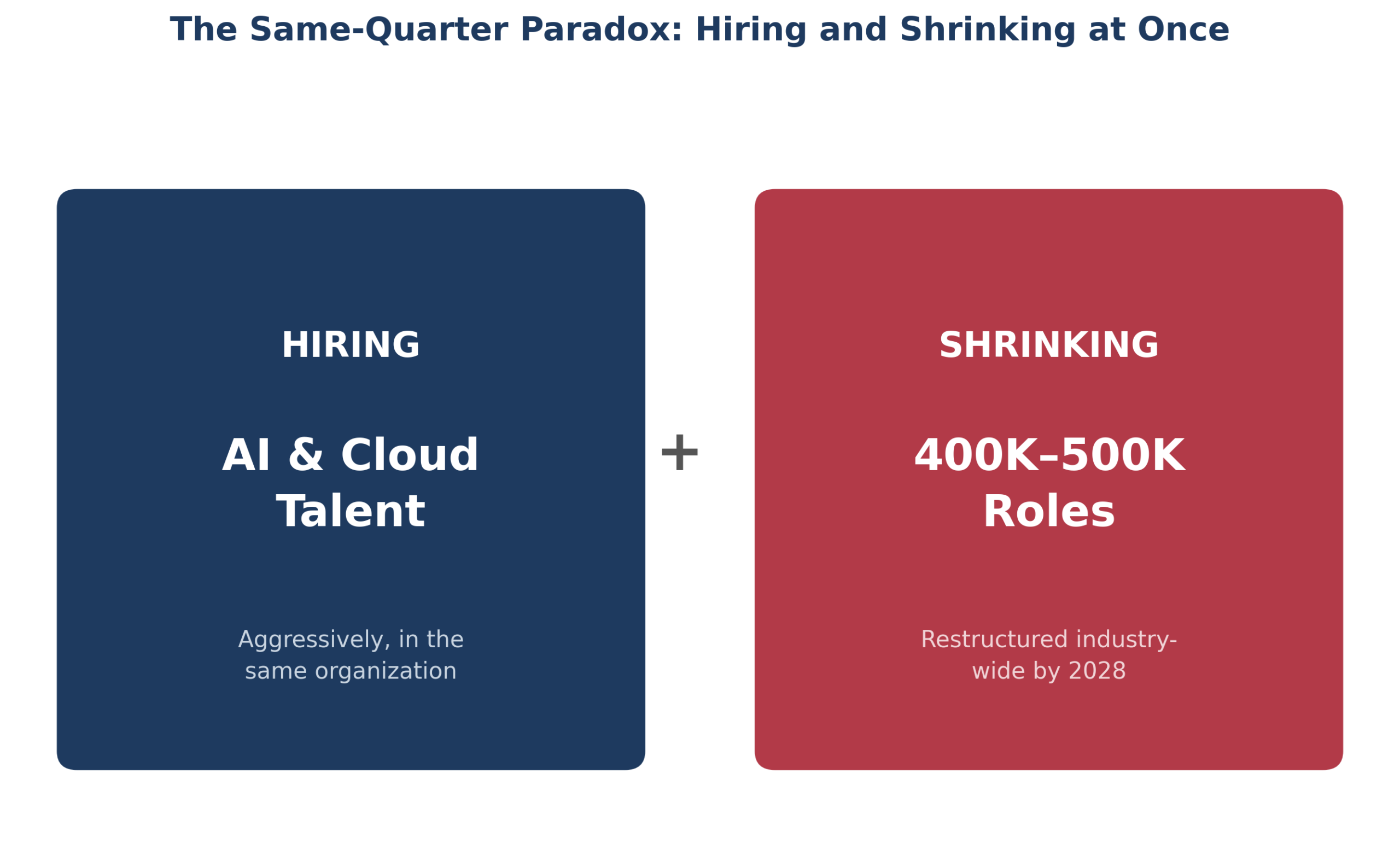
- Your Company Is Hiring and Shrinking at the Same Time — And That’s the Point While companies aggressively hire for AI and cloud talent, they’re simultaneously trimming legacy roles automation has made redundant — sometimes in the same quarter, inside the same organization. Hundreds of thousands of mid-career roles are expected to be restructured industry-wide by 2028. Businesses that treat hiring and restructuring as separate processes will fall behind the ones treating it as one continuous rebalancing act.
There’s a geography shift underneath all of this too — growth is moving toward GCC-heavy hubs and Tier II cities, while some traditional metro markets are actually contracting. Talent sourcing strategies built purely around the old metro playbook are already losing ground.
Stop Hiring for Roles. Start Investing in Capability.
The organizations getting this right have stopped asking “do we need to hire for this role” and started asking “what’s the smartest way to acquire this capability.”
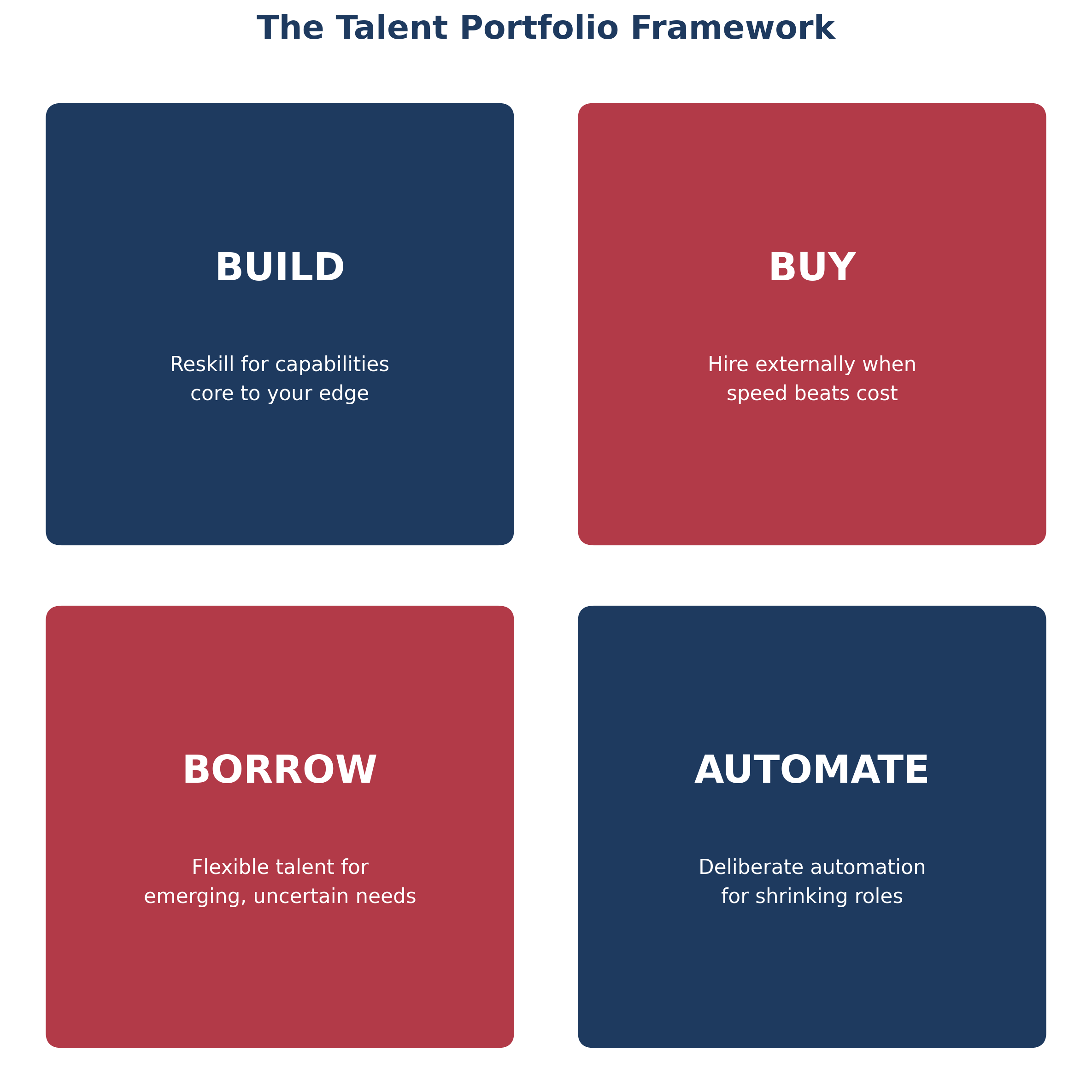
That means treating talent like a portfolio, with four levers:
- Build — invest in reskilling for capabilities core to your edge, especially where external hiring means competing in an overheated market.
- Buy — hire externally only where speed matters more than cost, and where the skill is too scarce to build in time.
- Borrow — use contract and flexible talent for emerging or uncertain needs. This model is growing fast for a reason.
- Automate — for roles already shrinking, treat automation as a deliberate strategy, not a reaction.
The businesses winning right now aren’t the ones hiring the most. They’re the ones using the right lever for the right capability, and revisiting that mix constantly instead of once a year.
The Opening We Can’t Afford to Miss
This shift isn’t a passing trend — it’s a structural rewrite of how talent gets built, bought, and deployed. And it creates a real opening for us.
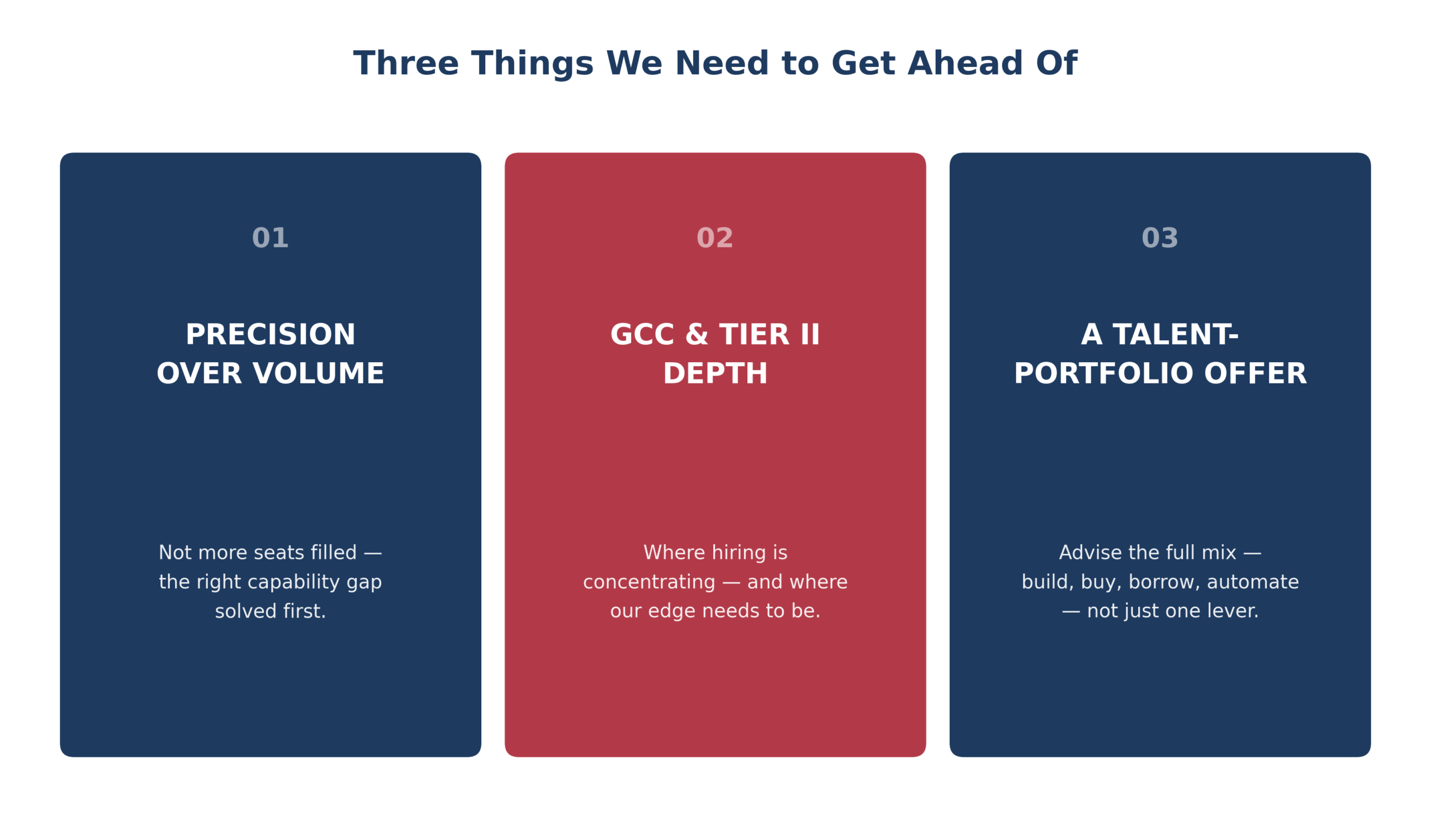
Three things we need to get ahead of:
- Precision over volume. Clients don’t need help filling more seats — they need help identifying exactly which capability gap is costing them the most, and solving that first. Our value has to be diagnostic, not just transactional.
- GCC and Tier II expertise as a differentiator. As hiring concentrates around GCCs and emerging city hubs, firms with genuine depth in these markets will out-position generalist competitors fast. This is where we should be building our sharpest capability.
- A talent-portfolio offering, not just a hiring service. Clients are going to need help thinking across build, buy, borrow, and automate — not just executing one of those levers. The consultancies who can advise on the mix, not just fill the roles, will own the highest-value conversations in this market.
The CXOs who move on this now will be the ones defining the next five years of their industries. Our job is to make sure we’re the ones helping them get there first.
Let’s connect for a Strategic Discussion!