BPO Hiring Grew 21% in 2026: Why AI Made the Industry More Human, Not Less

BPO Hiring Just Grew 21%. The “AI Is Killing This Industry” Story Was Wrong

If you’ve been hearing that AI is quietly gutting the BPO industry, the data says otherwise. BPO and ITES hiring grew 21% year-on-year in early 2026 — one of the fastest-growing sectors in the entire job market, holding double-digit growth for three straight months.

A man and woman shaking hands across a table with a digital human face made of light particles in the background, symbolizing AI and human collaboration
AI supports the process — people still make the connection

The details underneath make it more interesting:

  • Fresher hiring grew 39% YoY — the single largest entry-level surge of any tracked sector. If AI were simply replacing junior roles, this number shouldn’t exist.
  • Senior hiring (10+ years experience) grew 9% YoY — this isn’t a volume story or an entry-level story alone. It’s both, happening together.
  • Foreign multinationals drove over 80% of the increase — this isn’t a domestic recovery. It’s global demand, actively choosing India.
  • Kolkata alone has 200+ active BPO firms serving clients across the US, UK, UAE, Canada, and Australia — for hiring teams on the ground, this isn’t a forecast. It’s already showing up in mandates.
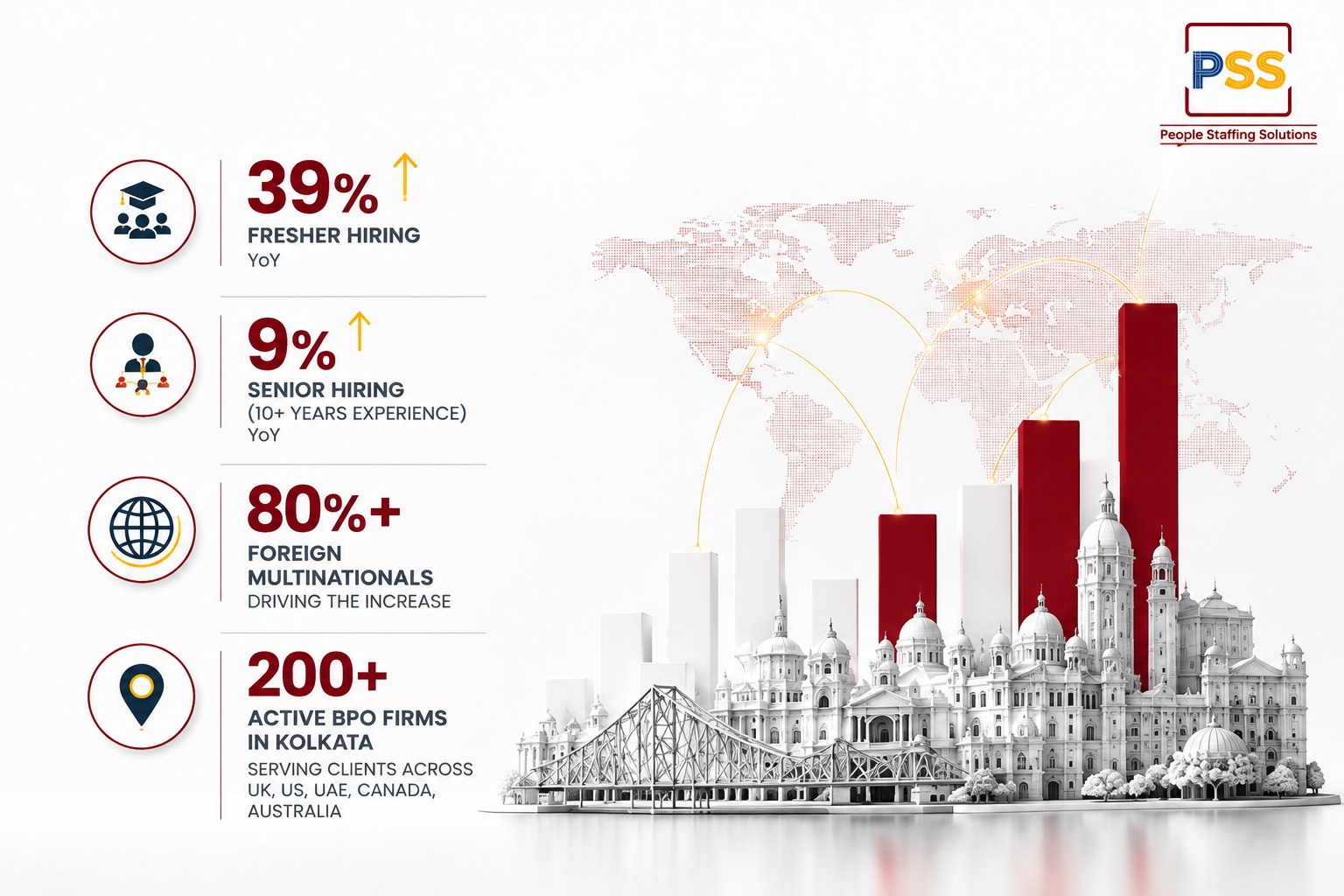
Infographic listing BPO hiring statistics including 39 percent fresher hiring growth, 9 percent senior hiring growth, 80 percent foreign multinational demand, and 200 plus active firms in Kolkata, with a city skyline in the background
Fresher hiring, senior hiring, and global demand are all rising together

AI Didn’t Shrink the BPO Job. It Humanified It.

Here’s the part most narratives get backwards.

  • AI and automation haven’t eliminated the BPO agent — they’ve eliminated the scripted version of that job.
  • Chatbots now handle what never needed a human in the first place: password resets, order status checks, FAQ-level queries.
  • What’s left is everything a script couldn’t cover — the angry customer, the ambiguous complaint, the conversation that needs judgment and patience instead of a flowchart.

That’s the real shift. BPO hiring isn’t becoming more automated — it’s becoming more human. The industry spent two decades hiring people to sound like scripts. It’s now hiring people specifically because they don’t.

That’s exactly why fresher hiring is surging. Companies aren’t hiring fewer people — they’re hiring people for the parts of the job AI genuinely can’t do. The job didn’t disappear. It got more human, and more valuable because of it.

The New Hiring Currency: Human Skills, Not Just Experience

What actually gets someone hired is changing:

  • Experience is losing ground to empathy, adaptability, and AI fluency — traits that don’t show up on a resume the way “3 years BPO experience” does, but matter far more once AI has already handled everything routine.
  • The talent pool is widening — employers are hiring people who’d have been overlooked under the old experience-first model, because the job no longer rewards someone who follows a script well. It rewards someone AI can’t replace.
  • Multilingual support and omnichannel fluency are now the default expectation, not a specialization.
  • The industry is splitting into two tiers — commoditized support work, and high-value, specialized CX work (BFSI, healthcare, technical support) that pays and grows very differently.
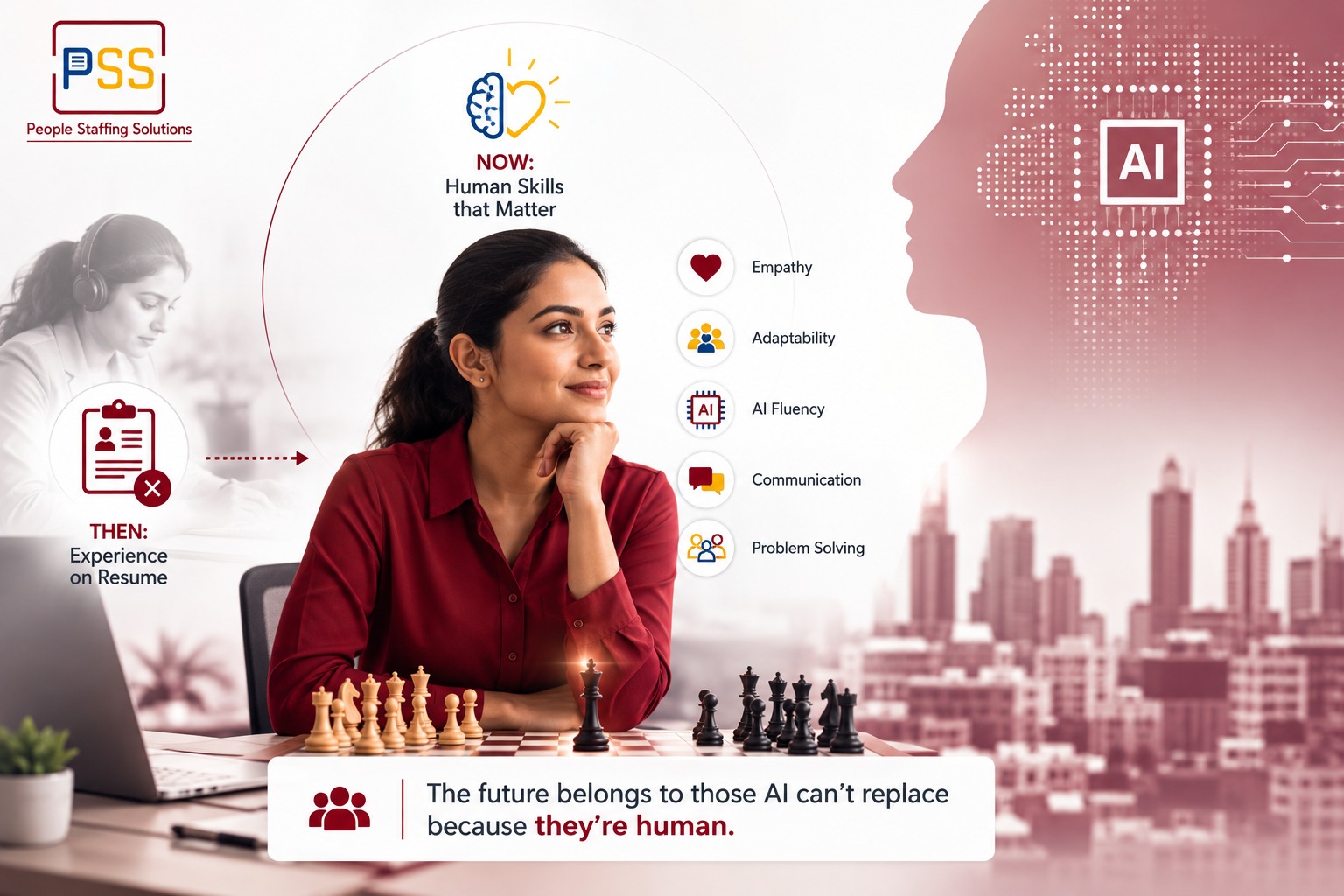
Woman sitting at a desk with a chess board, with icons listing human skills like empathy, adaptability, AI fluency, communication, and problem solving, contrasted with a crossed-out resume icon labeled experience
The new hiring currency: empathy, adaptability, and AI fluency over years on a resume

How People Work Is Changing Too

  • Hybrid is now the standard operating model, not a pandemic-era exception — and it’s proving to reduce turnover, not just improve morale.
  • Gig and flexible shift models are expanding, opening the door to caregivers, students, and talent that traditional fixed-shift roles used to exclude entirely.
  • Retention is now a tracked KPI, not an accepted cost of doing business.

What This Means for Us

This is a hiring market rewarding precision, not headcount — and that’s exactly where the opportunity sits for us.
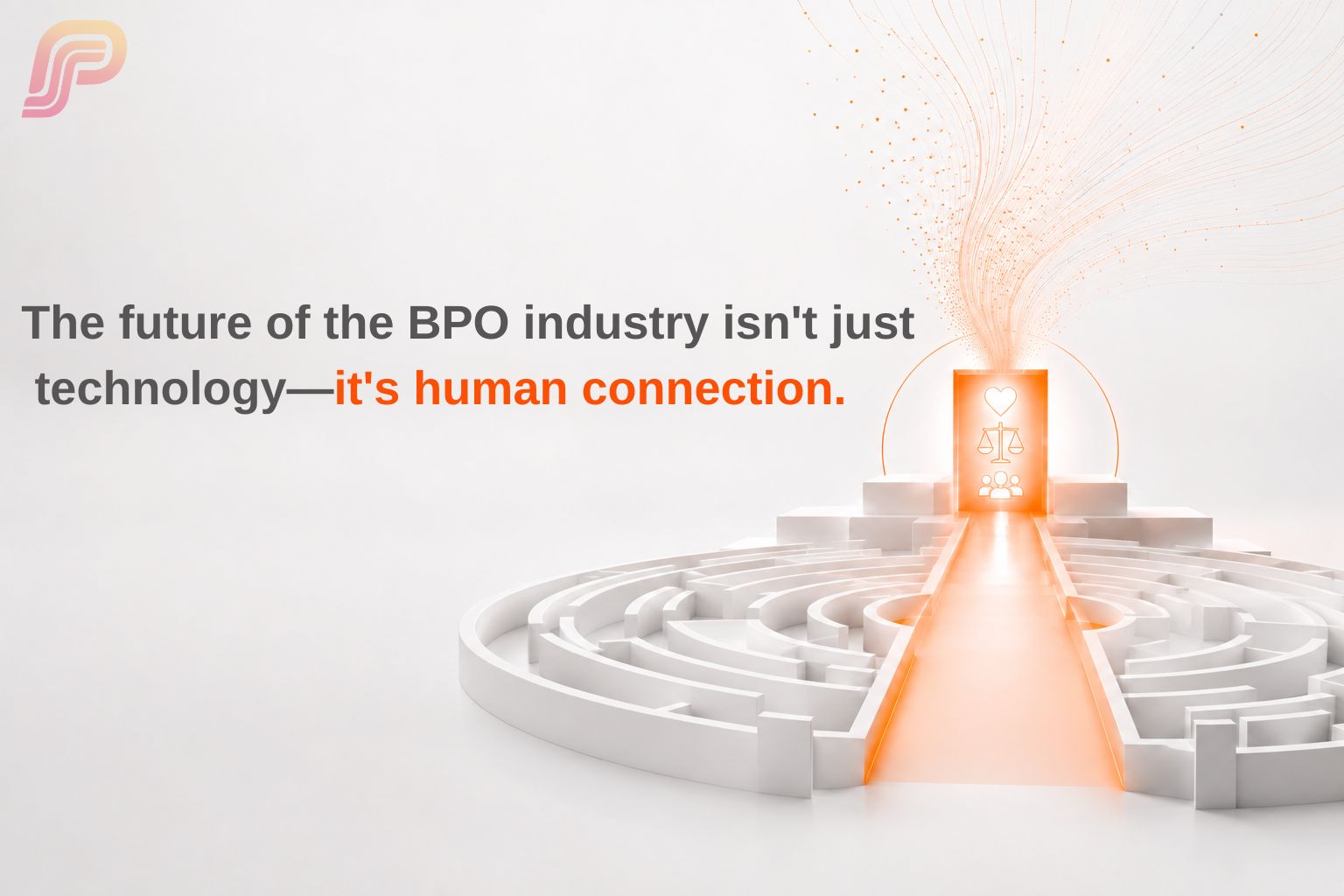
Glowing doorway with heart, scale, and people icons at the center of a white maze, symbolizing human connection as the future of the BPO industry
AI clears the path — but human judgment is what leads the way

Three things worth acting on:

  • Lead with the real story, not the fear narrative. Clients evaluating BPO partners are still operating on the outdated assumption that AI is shrinking this industry. We should be the ones correcting that — with data, not reassurance.
  • Build dual-track sourcing strength. The market needs strong fresher pipelines and senior specialist hiring simultaneously. Most competitors are still built for one or the other.
  • Treat retention and wellbeing as a service line, not a footnote. As turnover becomes a tracked KPI for clients, our ability to advise on retention — not just fill roles — becomes a genuine differentiator.

The BPO industry isn’t fading — it’s getting more human. AI took the scripts. It left the parts of the job that were always the hardest to automate in the first place: judgment, empathy, and the ability to make someone feel heard. The firms that understand that shift first will own the best mandates in 2026.

We help organizations build high-performing BPO teams—from high-volume fresher hiring to specialized CX leadership roles. If you’re preparing your hiring strategy for 2026, let’s discuss how data-driven recruitment can give your business a competitive edge.

Let’s connect for a Strategic Discussion!

Your 3% Hiring Growth Number Is Hiding a Talent Crisis

The Headline Number Is Lying to You: What’s Really Happening in India’s 2026 IT Hiring Market

Iceberg illustrating hidden depth beneath India's 2026 IT hiring headline growth number

If you’ve seen the topline figure — India’s IT hiring growing a modest 3% year-on-year — you might assume 2026 is a cautious, business-as-usual year for tech talent. That number is technically true and strategically misleading.

Beneath that modest headline, hiring has quietly split in two. AI, cloud, and cybersecurity roles now make up nearly two-thirds of all tech hiring demand. AI-first roles alone account for almost a third of new demand. At the same time, legacy roles — QA, IT support, routine testing — are shrinking as automation absorbs the work.

Companies aren’t hiring less. They’re hiring for a completely different skill set, at a completely different pace, than they were even 18 months ago.

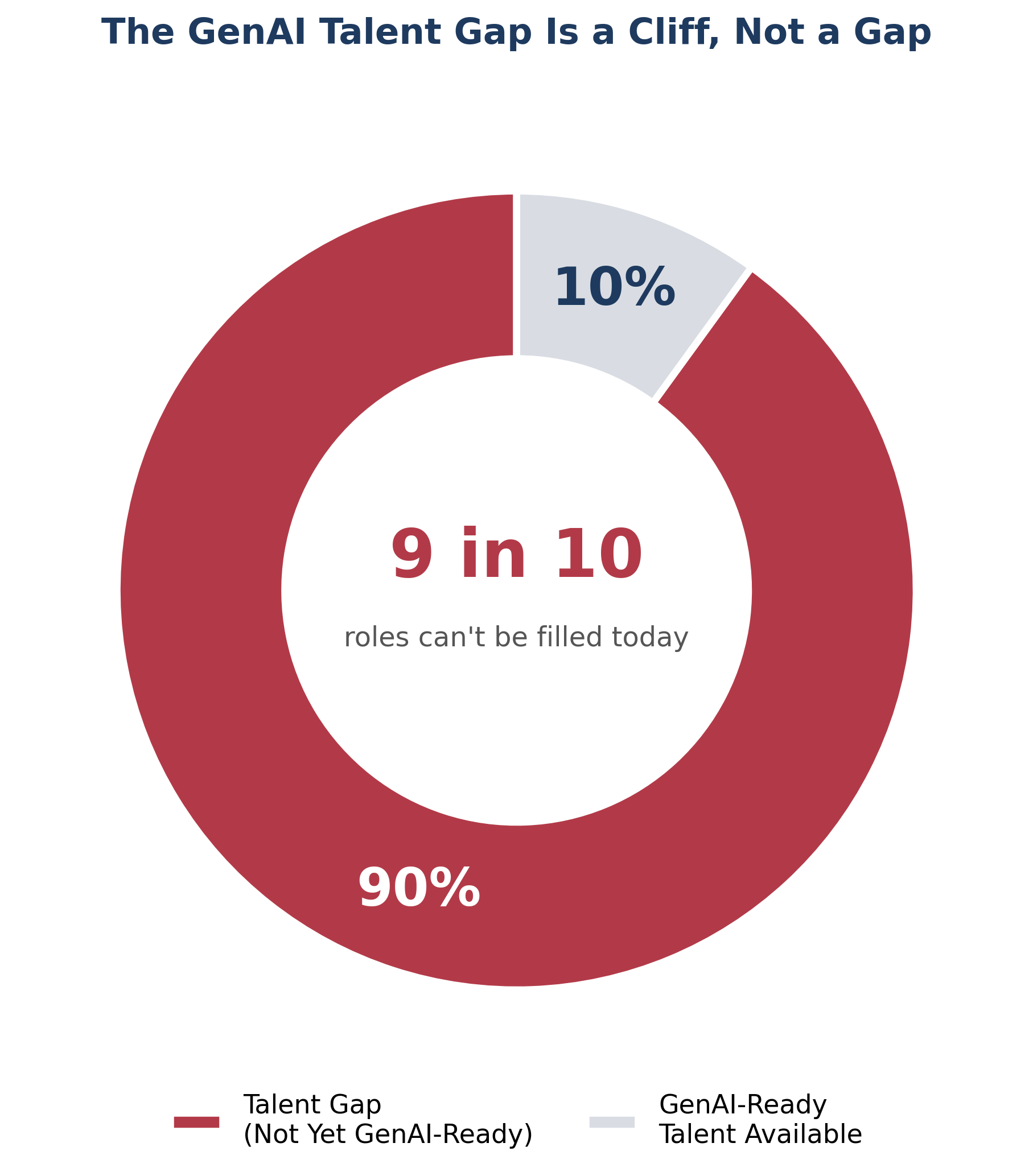
Donut chart showing 90 percent of GenAI-ready tech talent gap in India for 2026
The GenAI talent gap is a cliff, not a gap — 9 in 10 roles can’t be filled today.

The Three Shifts Separating Winners From the Ones Who’ll Find Out Later

  1. The Back Office Just Became the Front Line Global Capability Centres now account for nearly 44% of India’s IT hiring, up sharply from last year, and they’re increasingly hiring for senior, specialized, global-facing roles — not support functions. If GCCs aren’t central to your talent strategy, you’re competing for a shrinking share of the best talent.
  2. The Skill Gap Isn’t a Gap Anymore. It’s a Cliff. Talent ready for generative AI work is in such short supply that roughly 9 in 10 qualified candidates simply don’t exist yet. Cloud and cybersecurity gaps aren’t far behind. This isn’t a recruiting inconvenience — it’s a constraint on how fast any strategy can actually execute.
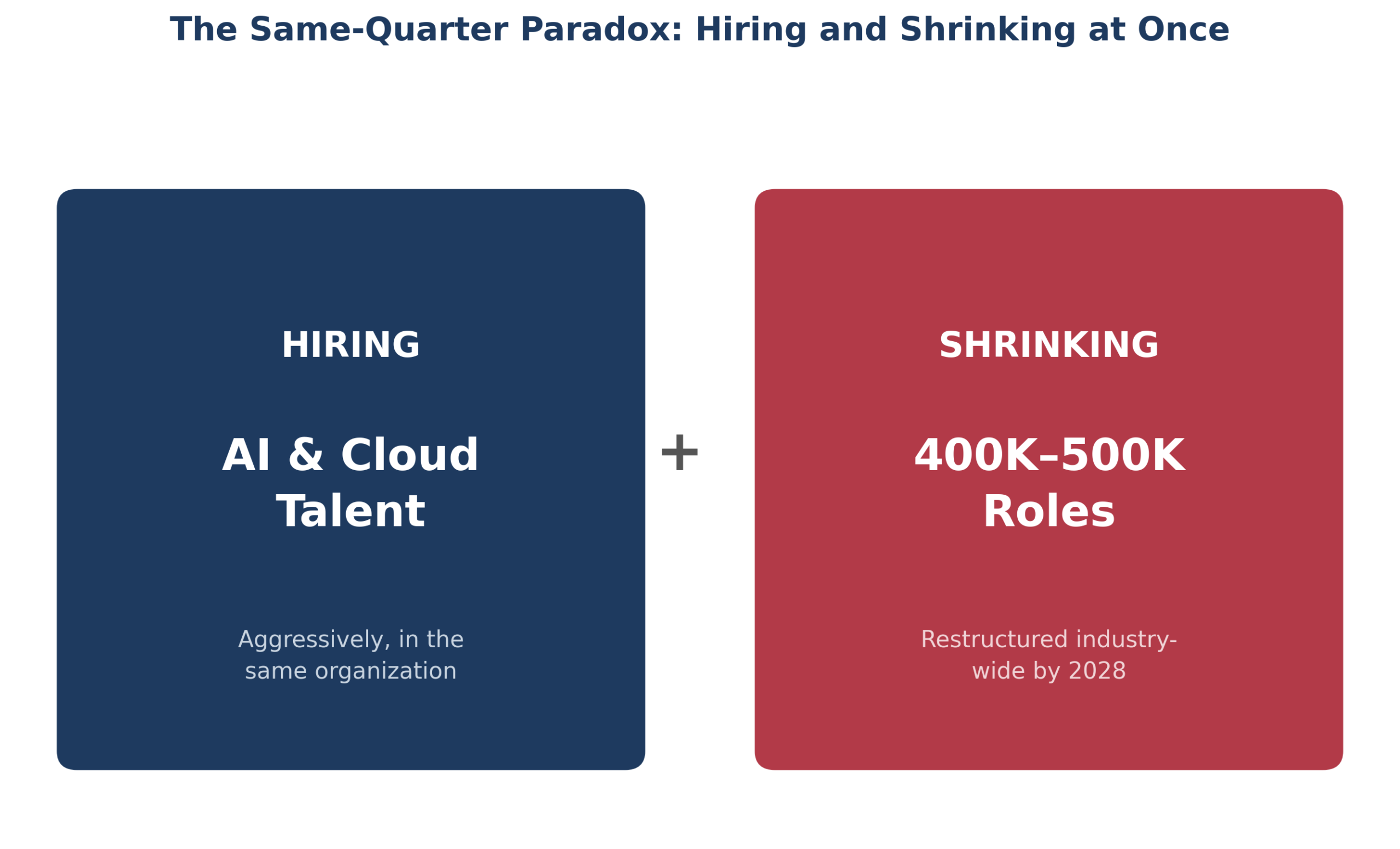
  3. Your Company Is Hiring and Shrinking at the Same Time — And That’s the Point While companies aggressively hire for AI and cloud talent, they’re simultaneously trimming legacy roles automation has made redundant — sometimes in the same quarter, inside the same organization. Hundreds of thousands of mid-career roles are expected to be restructured industry-wide by 2028. Businesses that treat hiring and restructuring as separate processes will fall behind the ones treating it as one continuous rebalancing act.
Chart showing companies simultaneously hiring AI and cloud talent while restructuring 400000 to 500000 legacy roles by 2028
The same-quarter paradox — hiring and shrinking at once.


There’s a geography shift underneath all of this too — growth is moving toward GCC-heavy hubs and Tier II cities, while some traditional metro markets are actually contracting. Talent sourcing strategies built purely around the old metro playbook are already losing ground.


Stop Hiring for Roles. Start Investing in Capability.

The organizations getting this right have stopped asking “do we need to hire for this role” and started asking “what’s the smartest way to acquire this capability.”

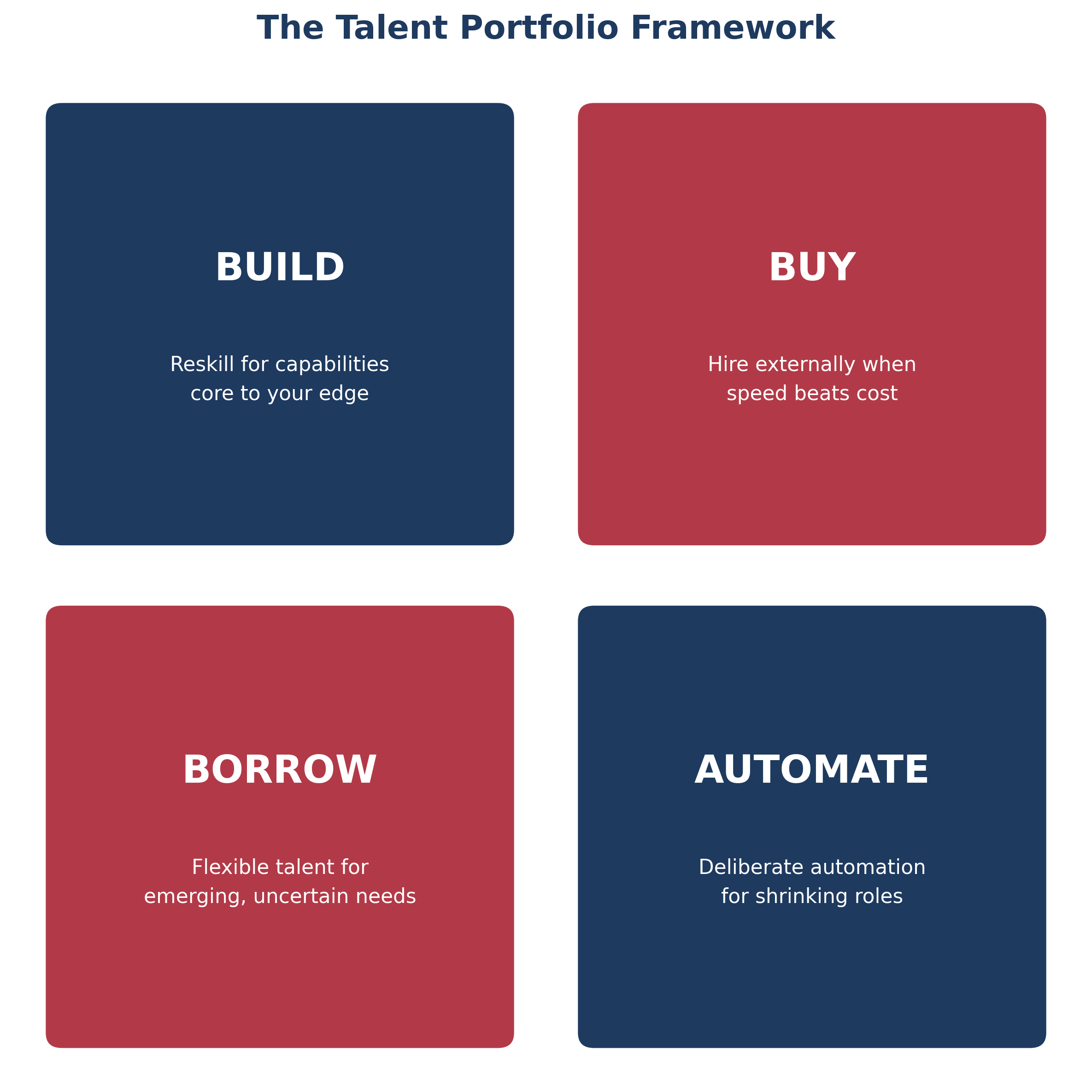
That means treating talent like a portfolio, with four levers:

  • Build — invest in reskilling for capabilities core to your edge, especially where external hiring means competing in an overheated market.
  • Buy — hire externally only where speed matters more than cost, and where the skill is too scarce to build in time.
  • Borrow — use contract and flexible talent for emerging or uncertain needs. This model is growing fast for a reason.
  • Automate — for roles already shrinking, treat automation as a deliberate strategy, not a reaction.
Talent portfolio framework diagram showing build, buy, borrow, and automate hiring strategies
The Talent Portfolio Framework — four levers for smarter talent acquisition.

The businesses winning right now aren’t the ones hiring the most. They’re the ones using the right lever for the right capability, and revisiting that mix constantly instead of once a year.


The Opening We Can’t Afford to Miss

This shift isn’t a passing trend — it’s a structural rewrite of how talent gets built, bought, and deployed. And it creates a real opening for us.

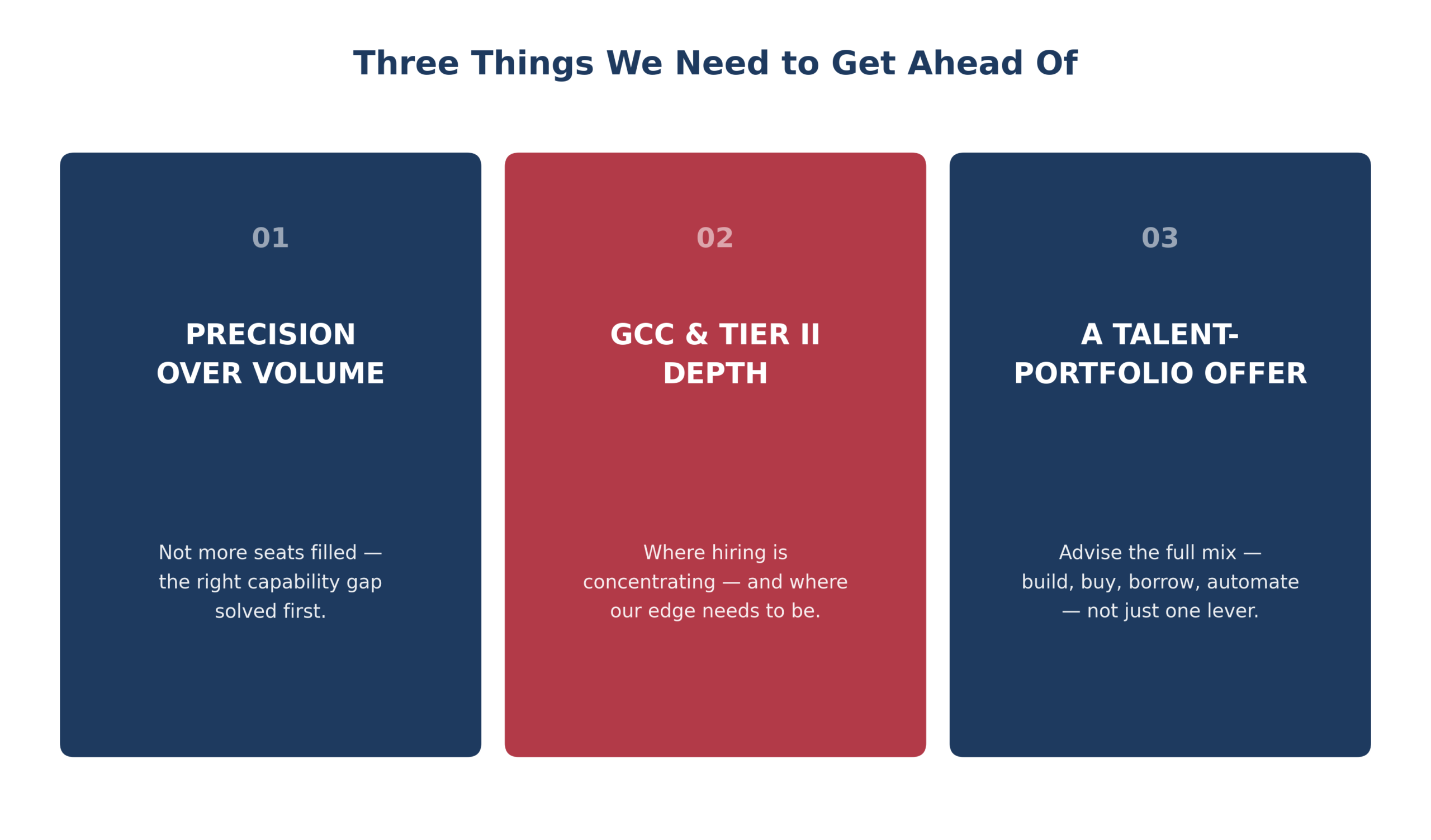
Three things we need to get ahead of:

  • Precision over volume. Clients don’t need help filling more seats — they need help identifying exactly which capability gap is costing them the most, and solving that first. Our value has to be diagnostic, not just transactional.
  • GCC and Tier II expertise as a differentiator. As hiring concentrates around GCCs and emerging city hubs, firms with genuine depth in these markets will out-position generalist competitors fast. This is where we should be building our sharpest capability.
  • A talent-portfolio offering, not just a hiring service. Clients are going to need help thinking across build, buy, borrow, and automate — not just executing one of those levers. The consultancies who can advise on the mix, not just fill the roles, will own the highest-value conversations in this market.
Three strategic hiring priorities for 2026 — precision over volume, GCC and Tier II depth, talent portfolio offering
Three things we need to get ahead of in 2026’s talent market.


The CXOs who move on this now will be the ones defining the next five years of their industries. Our job is to make sure we’re the ones helping them get there first.

Let’s connect for a Strategic Discussion!

LinkedIn
WhatsApp
Twitter
Facebook
Instagram